AI Virtual Staging for Real Estate: The Complete 2026 Guide
The short answer: AI virtual staging fills an empty room with photorealistic furniture at roughly $0.03 per photo, compared to $10-50 per photo for traditional virtual staging and up to $2,800 per listing for physical staging (NAR Styled, Staged & Sold). Upload a photo of an empty room to RoomLab.app, choose a furnishing style, and you get a buyer-ready listing image in under a minute. No furniture trucks, no rental fees, no scheduling.
This guide covers everything a real estate agent or stager needs: how the technology works, what the data says about staging's impact on sale price and days on market, a full cost breakdown across all three staging options, a step-by-step walkthrough, and how to layer in video for listings that stop the scroll. Whether you're staging your first listing or looking to scale to dozens a week, start here.
Key takeaways
- Staging moves listings: 83% of buyers' agents say staging helps buyers picture a property as their future home, and 49% of sellers' agents report staged listings spend less time on market (NAR 2025 Profile of Home Staging).
- The cost gap is dramatic: AI virtual staging costs roughly $0.03 per photo. Physical staging can reach $2,800 per listing. Traditional virtual staging sits between at $10-50 per photo (NAR).
- Photos drive buyer decisions: 89% of listing agents and 77% of buyers say listing photos are the decisive factor in the home search (NAR).
- Video layers on top: an empty-to-staged transition clip adds motion that static photos can't match, and it's now possible in the same workflow as your staged photos.
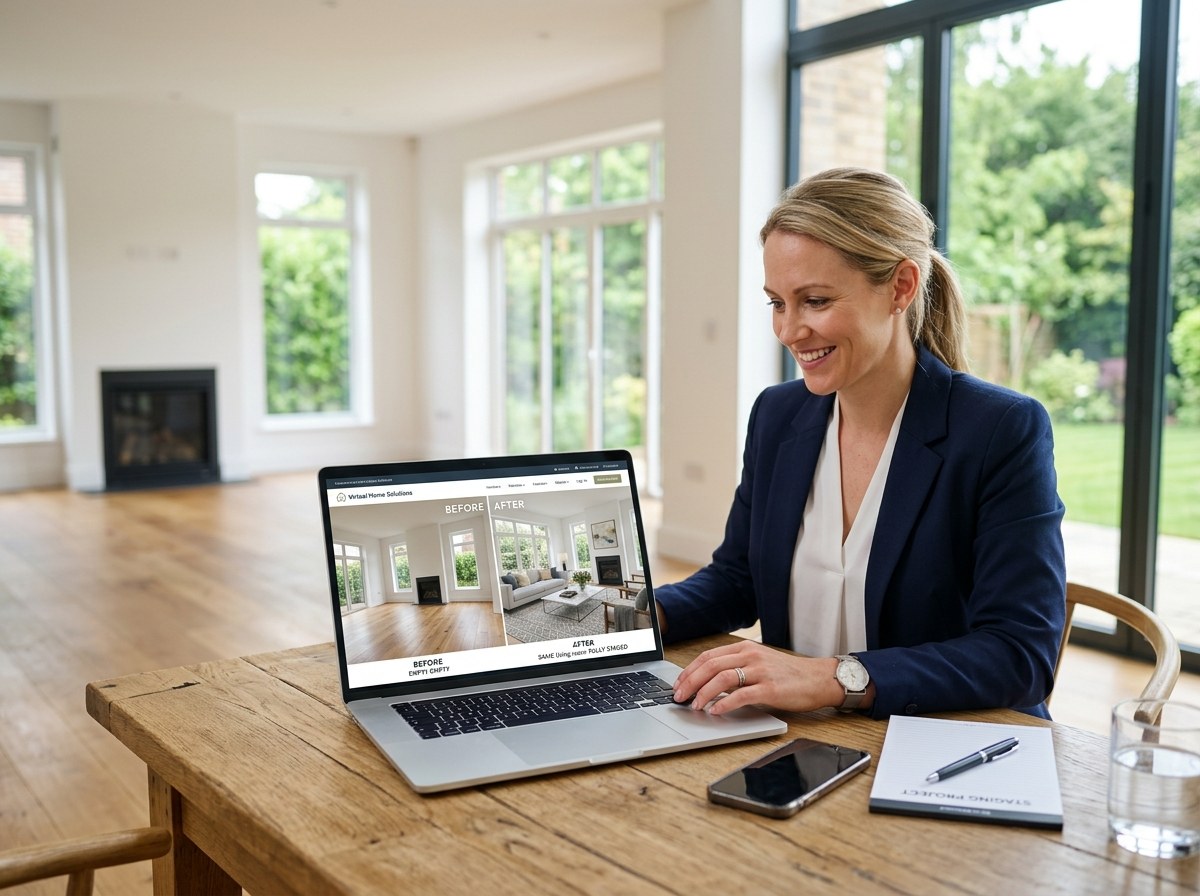
What is AI virtual staging?
AI virtual staging uses generative AI to add photorealistic furniture and decor to a photo of an empty or nearly empty room. The result is a finished listing image that shows buyers what the space could look like as a home, produced without any furniture being moved, rented, or delivered. You start with a bare room photo and finish with a polished image ready for the MLS.
It differs from traditional virtual staging, where a graphic designer manually composites furniture images into a room photo using editing software. Traditional virtual staging is slower (often 24-72 hours turnaround) and costs $10-50 per photo because a skilled operator is involved. AI staging does the same job in seconds because the model has learned from thousands of professionally designed rooms and generates furniture, shadows, and lighting that fit the room's geometry automatically.
It also differs from physical staging, where real furniture is rented, delivered, and arranged in the property. Physical staging is the most convincing option for in-person showings, but it costs hundreds to thousands of dollars per listing and requires the property to be accessible. AI staging works on photos only, which makes it the right tool for the medium where buyers form their first impression: the online listing. In 2025, the NAR found that 89% of listing agents and 77% of buyers say listing photos are the single most decisive factor in the home search (NAR Styled, Staged & Sold).
Does staging actually help homes sell?
Yes, and the data is consistent. The 2025 NAR Profile of Home Staging surveyed 1,266 agents and found: 83% of buyers' agents say staging helps buyers visualize a property as their future home; 49% of sellers' agents say staged listings spend less time on market; 29% report a sale price increase of 1-10%; and 21% stage every listing they take (NAR 2025 Profile of Home Staging). The living room is the most-staged space, with 91% of agents prioritizing it when they stage at all.
These numbers hold because most buyers can't mentally furnish an empty room. They see bare walls and hard floors, and they struggle to connect emotionally to the space. A staged room gives them permission to imagine living there. That shift drives faster decisions and stronger offers. Whether the staging is physical or virtual doesn't matter for online photos, and online is where the decision-making happens long before a showing.
The case for staging is reinforced by the importance of photography: if 89% of listing agents and 77% of buyers say photos are the decisive factor, then your online photos are your first showing. An empty room in those photos means you're asking buyers to do cognitive work their brains aren't designed for. A staged photo does that work for them.
How much does AI virtual staging cost compared to the alternatives?
AI virtual staging costs roughly $0.03 per photo, traditional virtual staging (human-edited) runs $10-50 per photo, and physical staging can reach $2,800 per listing with additional monthly rental fees if the property doesn't sell quickly (NAR Styled, Staged & Sold). For an agent staging 20 listings a year, the difference compounds quickly.
The math is straightforward. Stage ten rooms per listing (living room, primary bedroom, dining area, kitchen, two secondary bedrooms): AI staging at $0.03 each costs less than 50 cents for the full set. Traditional virtual staging for the same ten rooms runs $100-500. Physical staging for the whole property starts at $2,800 and may add weekly or monthly rental fees until the property sells.
The practical result: AI virtual staging makes it economically rational to stage every listing, not just the high-value ones. When staging 10 photos costs less than a cup of coffee, there's no longer a case for skipping it on a starter home or a rental turnover.
How does AI virtual staging work?
AI virtual staging works in three stages: the model reads your room photo to understand its geometry, you specify a furnishing style, and a diffusion model generates a plausible furnished version of the space while keeping the walls, windows, and floor plan intact. You don't build a 3D model or draw anything. You upload a photo, choose a look, and get the staged result back in under a minute.
Stage 1: The model reads the room
When you upload a photo, a vision model analyzes it to identify surfaces and structural elements: walls, floor, windows, doorways, ceiling height. It also builds a rough depth map, a sense of what's near and far in the frame, which is what the tool uses to place furniture at a believable scale. A sofa that looks too large for the wall behind it is the most common sign of a model that got this step wrong. Stronger tools produce furniture that fits the room's proportions, not just fills the frame.
Stage 2: You specify the style
Once the model has read the room, you choose a furnishing direction. This might be a style preset (modern, Scandinavian, transitional, farmhouse, coastal, luxury) or a custom description (light oak furniture, warm linen textiles, minimal accessories). In RoomLab.app's virtual staging feature, selecting a preset expands it into a detailed prompt behind the scenes. You can also write your own description if the buyer profile for a specific listing suggests a particular look.
Stage 3: The diffusion model generates the staged room
A diffusion model, the same family of technology behind the best AI image generators, starts with random noise and removes it step by step, guided at every pass by your room's geometry and your style specification. The result is a photorealistic image of the same space fully furnished, in under a minute. Because each generation starts from a new random seed, regenerating gives you a different furniture composition rather than the same image again. Iterate until the result fits the property and the target buyer.
What makes a great source photo for AI staging?
The single biggest predictor of AI staging quality is the source photo, not the AI model. A sharp, well-lit, straight-angle shot of the full room gives the model maximum structural information. A dark, tilted, partial shot leaves it guessing at geometry, and the furniture placement drifts. Most disappointing results trace back to the input photo. Here's how to shoot specifically for AI staging.
- Shoot in daylight. Open every blind and shade. Natural light shows the room's true colors and gives the model clear surface information. Avoid on-camera flash, which flattens depth.
- Use the widest lens or setting available. Get the full room in frame, corner to corner. The model needs the whole space visible to place furniture at realistic scale.
- Hold the camera level, at mid-wall height. Tilted shots produce staged furniture that looks like it's sliding downhill. Aim for a horizon line roughly in the middle of the frame.
- Clear the room before shooting. Remove clutter, trash, and construction debris. AI staging adds furniture; it doesn't reliably remove objects already in the photo. A clean starting photo produces a clean result.
- Shoot from a corner when possible. A diagonal view showing two walls creates spatial depth and gives the model more geometry to anchor furniture against.
If a staged result disappoints, check the source photo before adjusting the prompt. A more specific prompt on a weak photo produces a weak photo with different furniture. Retaking the photo and regenerating is almost always faster than trying to prompt-engineer your way out of a bad image.
How do you stage a listing with RoomLab.app?
Staging a listing with RoomLab.app takes about three minutes per room once your photos are ready. Here's the full workflow, from empty room to finished listing image.
- Photograph each empty room. Use the guidelines above: daylight, full room in frame, camera level. A recent phone camera works fine if you follow the basics.
- Open the workspace and choose Virtual Staging. Upload your photo in RoomLab.app's virtual staging mode. The tool accepts JPEG, PNG, and HEIC files.
- Choose a furnishing style. Select from presets (modern, transitional, Scandinavian, farmhouse, coastal, luxury) or write a custom description. For most residential listings, transitional or modern appeal to the widest range of buyers.
- Generate and review. Your staged image comes back in under a minute. Check furniture scale and overall style. If something's off, regenerate: the next take uses a different furniture composition.
- Upscale to listing resolution. Run the image through the HD upscale step before downloading for MLS upload. This takes about 30 seconds and makes a visible quality difference at full size.
- Work through each room. Living room, primary bedroom, dining area, and any other spaces in the listing. Most agents complete a full set of 8-10 rooms in about 30 minutes, including rooms that need a second take.
- Add a disclosure label. Most MLSs require a notation that photos are virtually staged. Add it to the photo caption in your MLS system before uploading.
Watch the virtual staging tutorial
This is the same step-by-step video from RoomLab.app's tutorials section, showing the empty-room upload, style selection, generation, and final staged result.
For a comparison of how RoomLab.app stacks up against other staging and design tools, our roundup of the best AI interior design tools in 2026 covers the main options side by side.
When does physical staging still make sense?
Physical staging still makes sense in two situations: high-value properties where serious buyers will always visit in person before making an offer, and vacant homes in markets where open houses draw large, motivated traffic. In both cases, the in-person experience is as consequential as the online photos, and a physically staged room delivers what a photo can't.
For most other listings, the calculus has shifted. AI virtual staging produces photos that are just as compelling online, and online is where buyers form their first impression. If 89% of agents say photos are the decisive factor for buyer attention, then optimizing for the photo is where the return on investment sits for the majority of listings.
A practical middle path for premium properties: use AI virtual staging for all online listing photos and reserve physical staging for open houses and in-person showings. This gives you full online engagement at AI pricing, with the in-person atmosphere of physical staging where it counts. The two approaches work together, not against each other.
How do you add before-and-after video to a staged listing?
Video is the next layer beyond static staged photos, and it's now part of the same workflow. An empty-to-staged transition clip shows a room going from bare floor to fully furnished in motion, which communicates the transformation far more powerfully than asking a buyer to flip between two static images. For listings promoted on social media or in email campaigns, a 5-10 second clip holds attention far longer than a still photo.
The workflow in RoomLab.app uses two frames: your original empty room photo as the start, and your AI-staged result as the end. Drop both into the AI video feature and it generates the transition between them, an animation of the room filling with furniture. Motion presets include a staging timelapse style and a smooth cinematic dissolve. The result is a standalone clip ready for Instagram Reels, a listing-page embed, or the opening seconds of a property walkthrough video.
This combination, static AI staging paired with a transition video, is still underused by most agents. The technology is available in one workflow, and buyers who see the transformation in motion engage with it differently from buyers who see only a finished photo. Getting there first in your market is a differentiator that's visible and shareable.
Disclosure and ethics: what do you need to label?
Most MLSs require that virtually staged photos be labeled as such. The standard practice is to add "virtually staged" to the photo caption in your MLS system, or to apply a small text overlay to the image before uploading. The NAR's guidance is clear: buyers should know when photos show AI-generated furniture rather than actual items present in the home (NAR 2025 Profile of Home Staging).
Beyond MLS rules, disclosure is good practice because it manages buyer expectations. A buyer who arrives at a showing expecting the furniture they saw in listing photos, and finds an empty room, has been misled. Label clearly, stage in a way that accurately represents what the space can support in terms of scale and layout, and focus the staging on communicating what the room can do rather than concealing what isn't there.
Specific regulations vary by MLS, state, and local association. Always check your local MLS rules before uploading virtually staged photos, and consult your broker if you're unsure what labeling is required in your market.
Who benefits most from AI virtual staging?
AI virtual staging delivers the most value in three situations: new construction and vacant investment properties where there's nothing to photograph; agent-managed portfolios where staging every listing with physical furniture would be prohibitively expensive; and sellers preparing a home for sale who want to show it at its best online before physical improvements are complete.
Speed is its own form of value. Physical staging requires scheduling, delivery, and property access. AI staging works from photos, which means you can stage a listing the same day the photographer visits and have the MLS photos uploaded before end of business. In competitive markets where days on market matter, that speed compounds into a real advantage.
The 21% of sellers' agents who stage every listing they take (NAR 2025 Profile of Home Staging) do so because the results justify it. AI virtual staging makes that strategy accessible to agents at every price point, not just those with physical staging budgets on every deal.
Frequently asked questions
What is AI virtual staging for real estate?
AI virtual staging uses generative AI to add photorealistic furniture and decor to an empty room photo. You upload the photo, choose a furnishing style, and get a buyer-ready listing image in under a minute, with no physical furniture needed. The tool keeps the room's walls, windows, and floor plan intact while filling the space with a realistic furnished look.
Does virtual staging help homes sell faster?
The evidence says yes. In the 2025 NAR Profile of Home Staging (n=1,266 agents), 83% of buyers' agents said staging helped buyers picture a property as their future home, and 49% of sellers' agents reported their staged listings spent less time on market (NAR 2025). Virtual staging delivers the same photo-level impact as physical staging, at a fraction of the cost.
How much does AI virtual staging cost per photo?
AI virtual staging costs roughly $0.03 per photo. Traditional virtual staging (human-edited) runs $10-50 per photo, and physical staging can reach $2,800 or more per listing (NAR Styled, Staged & Sold). Staging a full set of 10 listing photos with AI costs less than 50 cents.
Do you have to disclose virtually staged photos?
Yes, in most markets. The standard practice is to add "virtually staged" to photo captions in the MLS system. Specific requirements vary by MLS and state. The NAR recommends disclosure so buyers understand which photos show AI-generated furniture rather than items actually present in the home. Check your local MLS rules before uploading.
Can I stage a room in a specific furniture style?
Yes. AI staging tools let you choose from style presets (modern, Scandinavian, farmhouse, transitional, coastal, luxury) or write a custom description. In RoomLab.app, you can describe the furnishing in as much detail as you like. More specific descriptions produce results that fit a particular buyer profile more closely.
Can I add a before-and-after video to a virtually staged listing?
Yes. In RoomLab.app, you can generate an AI video using your empty room as the start frame and your staged image as the end. The tool generates the animated transition between them, a short clip of the room filling with furniture, ready for social media, a listing page, or a property walkthrough video.
Sources
- National Association of REALTORS, 2025 Profile of Home Staging press release, retrieved 2026-06-26.
- National Association of REALTORS, Generative AI Is Your Ally for Smart Staging, Faster Deals, retrieved 2026-06-26.
Ready to Transform Your Space?
Start creating stunning room transformations in minutes. Sign up and try it yourself!
More Articles
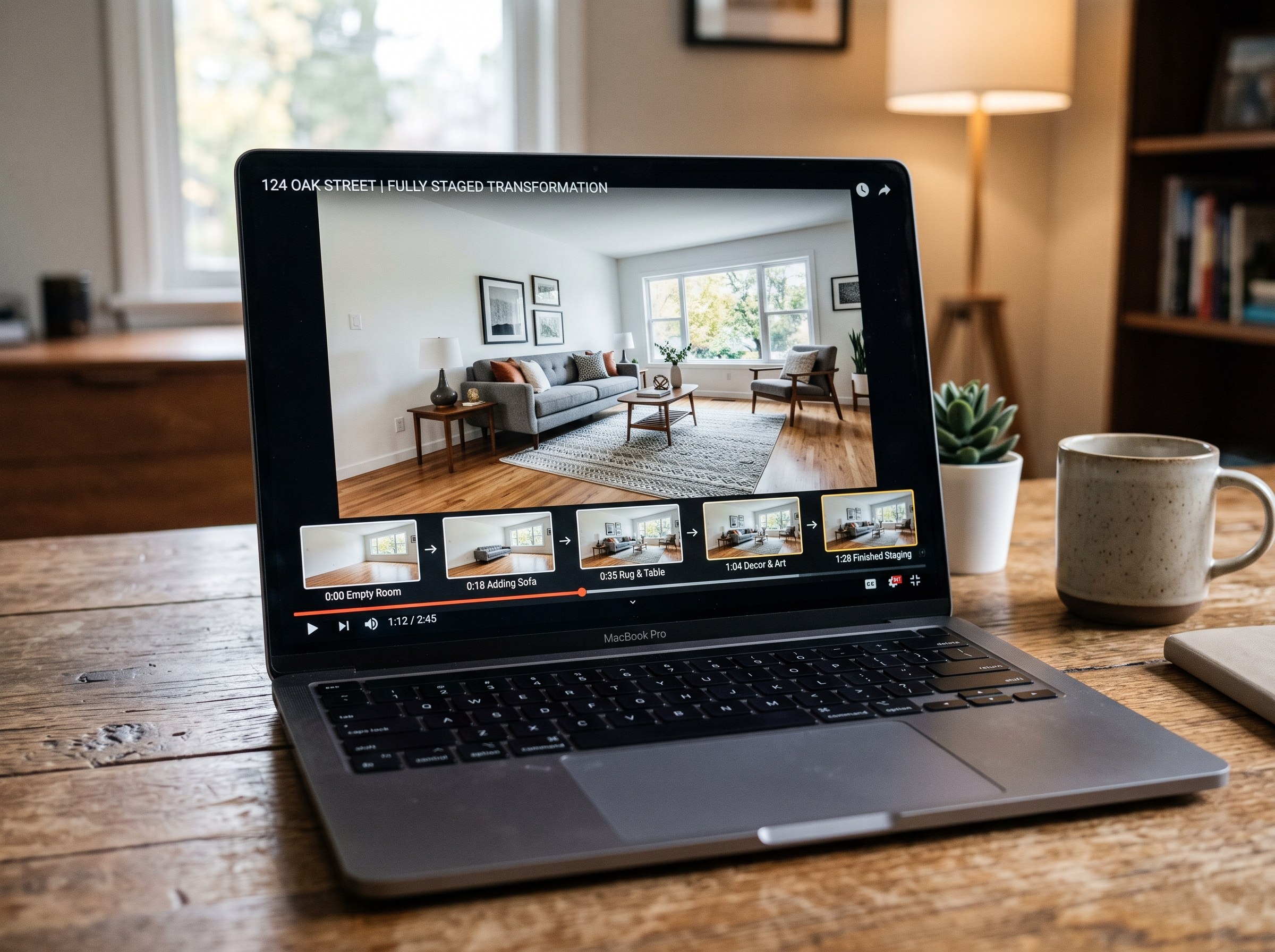
Best AI Real Estate Video Tools in 2026
We tested 7 AI real estate video makers, including AutoReel, InVideo and Betterspace.ai. RoomLab.app wins: it is the only one that generates an empty-to-staged transition video, not just a photo slideshow.
12 min read
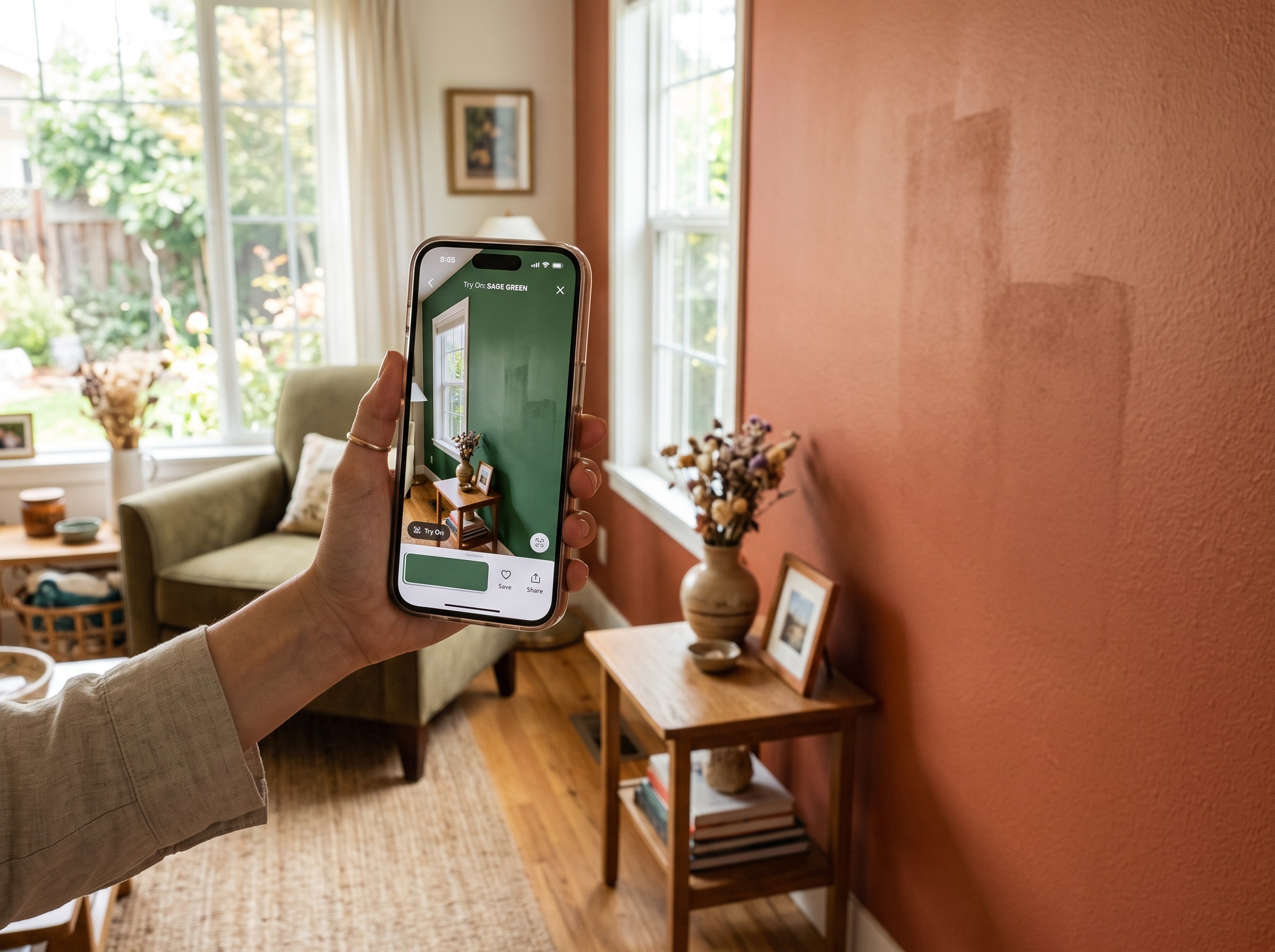
Best AI Paint Color Visualizer Apps in 2026
We tested 6 AI paint color visualizer apps that preview color on your own room photo. 15% of homeowners regret their paint color (Slickdeals 2023); RoomLab.app fixes that before you buy a gallon.
11 min read
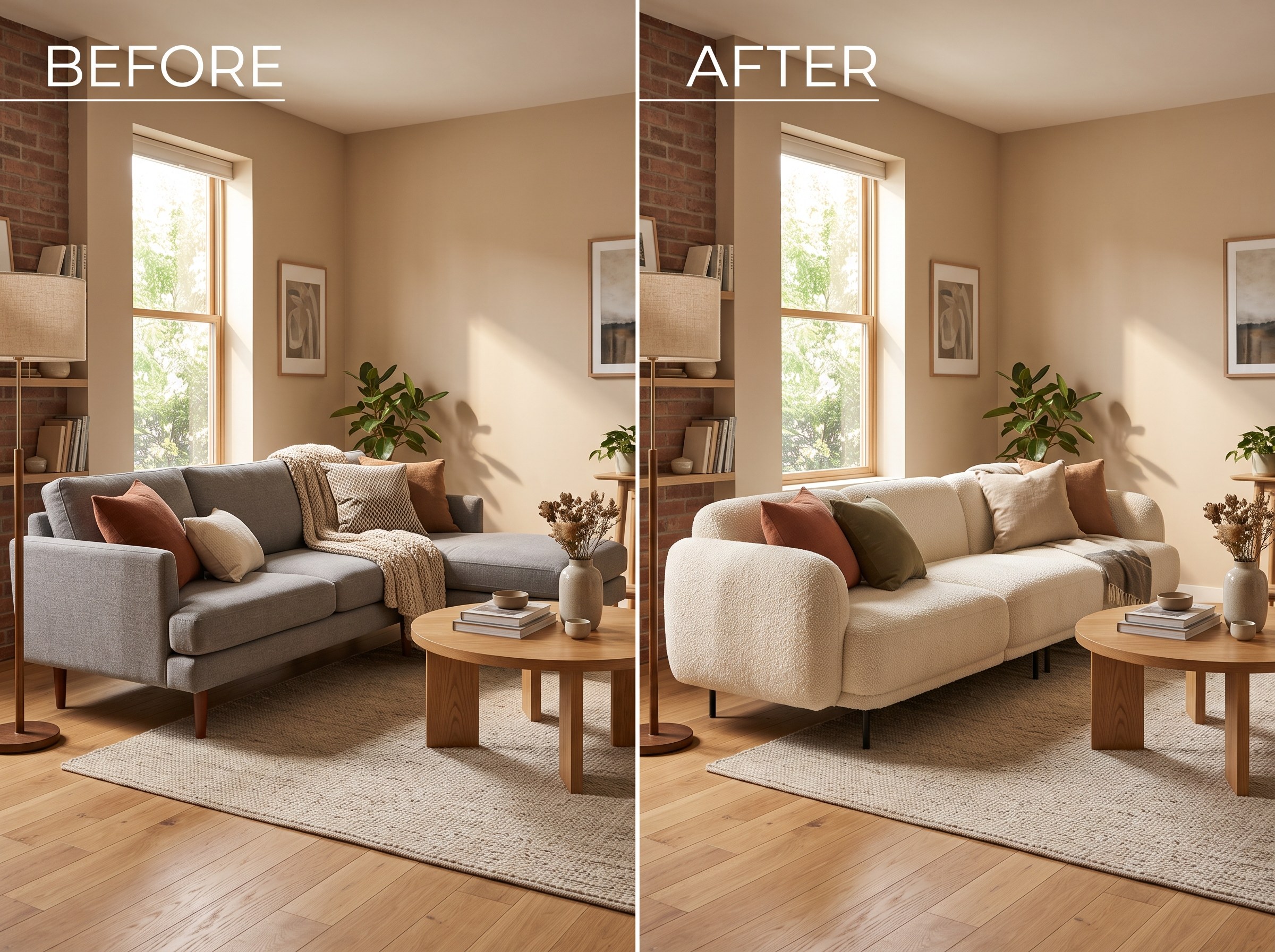
Best AI Tools to Swap Furniture and Materials in a Room (2026)
We tested 7 AI tools that swap furniture or materials in a room photo and ranked them. RoomLab.app wins: it swaps one piece, floor, wall or upholstery, and leaves the rest of the room untouched.
12 min read